Booking choice: The south Okinawa bus tour with Shuri Castle, from $47 per person. Check dates Tour details
Naha has a subtropical climate. The coldest month, January, still averages 17.3 °C, and the warmest, July, 29.1 °C, according to the Japan Meteorological Agency (JMA). What changes through the year is the rain, the sunshine and the typhoons.
This guide uses the JMA's official 1991 to 2020 normals for Naha and its typhoon statistics for the Okinawa region, then adds the castle's own calendar: festivals, the light-up and the park's forecast of the busy hours.
The quick answer
The best months for most visitors are October to early December and March to April: warm, drier than summer and mostly outside typhoon season. The rainy season normally runs from about 10 May to 21 June, and typhoons come closest from July to October. November 2026 adds the reopened Seiden, from 23 November.
Which month is best to visit Okinawa?
November, for us. Highs around 25 degrees, less rain than summer, few typhoons, and in 2026 the reopened Seiden.
Visit Okinawa, the prefecture's tourism site, does not name one best month. It says the right time depends on what you want: whale watching in winter, beach openings in spring, marine life in summer and festivals in autumn. Fair enough. For a trip built around Shuri Castle and walking, the JMA numbers make the case for late autumn.
In November, Naha averages a daily high of 25.0 °C and a low of 20.4 °C, with 119.1 mm of rain. Compare September: 30.6 °C and 275.2 mm. The Okinawa region sees an average of 0.3 typhoon approaches in November against 1.9 in September.
Spring is the other strong choice. April averages 24.3 °C by day and 161.0 mm of rain, before the rainy season starts. December to February are cooler and greyer, with the fewest sunshine hours, and fine for sightseeing in a light jacket.
Five sights in one day by bus from Naha: Banta Cafe, Okinawa World, Umikaji Terrace, Shuri Castle and American Village.
Check dates for the south Okinawa bus tour with Shuri CastleWhat is the weather like in Okinawa month by month?
Mild winters around 20 degrees by day, hot summers above 31, and the most rain in May, June and September.
Official normals for Naha from the JMA, averaged over 1991 to 2020. The last column is the average number of typhoons that come within 300 km of a weather station in the Okinawa region each month.
| Month | Mean high | Mean low | Rain | Sunshine | Typhoon approaches |
|---|---|---|---|---|---|
| January | 19.8 °C | 14.9 °C | 101.6 mm | 93.1 h | None |
| February | 20.2 °C | 15.1 °C | 114.5 mm | 93.1 h | None |
| March | 21.9 °C | 16.7 °C | 142.8 mm | 115.3 h | None |
| April | 24.3 °C | 19.1 °C | 161.0 mm | 120.9 h | 0.0 |
| May | 27.0 °C | 22.1 °C | 245.3 mm | 138.2 h | 0.4 |
| June | 29.8 °C | 25.2 °C | 284.4 mm | 159.5 h | 0.6 |
| July | 31.9 °C | 27.0 °C | 188.1 mm | 227.0 h | 1.5 |
| August | 31.8 °C | 26.8 °C | 240.0 mm | 206.3 h | 2.2 |
| September | 30.6 °C | 25.8 °C | 275.2 mm | 181.3 h | 1.9 |
| October | 28.1 °C | 23.5 °C | 179.2 mm | 163.3 h | 1.1 |
| November | 25.0 °C | 20.4 °C | 119.1 mm | 121.7 h | 0.3 |
| December | 21.5 °C | 16.8 °C | 110.0 mm | 107.4 h | 0.0 |
Two things the table does not show. The castle visit is a climb, so summer heat feels stronger on the hill than in the city. And the sea stays warm: Visit Okinawa gives sea temperatures from around 21 °C in February to nearly 30 °C in August.
When is the rainy season in Okinawa?
Normally from about 10 May to about 21 June, per the Japan Meteorological Agency. It started early in 2026, around 4 May.
The Okinawa Regional Headquarters of the JMA gives the normal start of the rainy season as around 10 May and the normal end as around 21 June. Years vary: in 2026 it began around 4 May. Visit Okinawa puts it at mid-May to late June and adds that showers are sudden and common, but it rarely rains all day.
June is the wettest month in Naha, with 284.4 mm on average, and May follows with 245.3 mm. The castle still works in the rain: the Seiden interior is indoors, and the slot system means you are not standing in a long queue in the rain. Bring an umbrella for the gates and courtyards, and shoes that cope with wet limestone. The stones get slippery.
When is typhoon season in Okinawa?
From about June to October, with August the peak. The Okinawa region averages about eight typhoon approaches a year.
The JMA counts a typhoon as approaching when its center comes within 300 km of a weather station in the region. For Okinawa the 1991 to 2020 normal is 7.7 approaches a year: 2.2 in August, 1.9 in September, 1.5 in July and 1.1 in October. From January to March there were none in the whole 30 years. Visit Okinawa gives the season as June through September.
A typhoon can bring a day or two of wind and rain and disrupt flights, buses and tours. If you travel from July to October, keep a spare day at the end of the trip and book things you can cancel. Every tour on this site has free cancellation up to 24 hours before. Check the park's news page on the day for any closure.
Between storms, summer has the most sunshine of the year: 227.0 hours in July. Go to the castle early or late. The midday sun on the open Una courtyard is fierce.
When do cherry blossoms bloom in Okinawa?
In January and February. The JMA's normal flowering date for the hikanzakura cherry in Naha is 16 January.
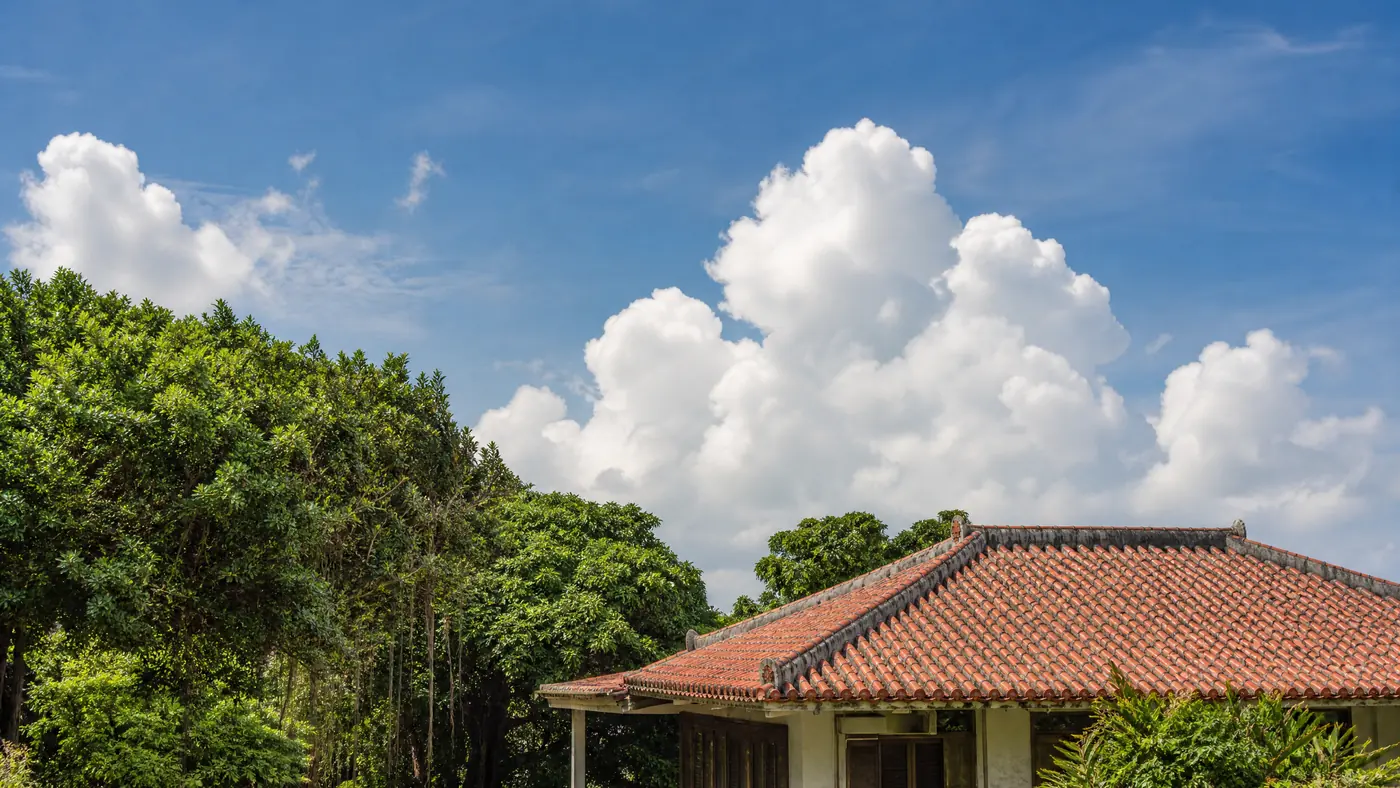
Okinawa's cherry is the hikanzakura, a deep pink variety that flowers in the middle of winter. The JMA records its normal flowering date in Naha as 16 January, averaged over 1991 to 2020. Visit Okinawa calls them Japan's earliest cherry blossoms and suggests the Nakijin Castle Ruins in the north for a sakura walk.
Winter has other reasons to come. January averages 19.8 °C by day, there are no typhoons, and Visit Okinawa lists whale watching as a winter highlight. On some days a north wind makes it feel cold, so pack a sweater. The castle closes earlier from December to March: the paid area shuts at 18:00, with the last Seiden slot at 17:00.
What festivals are held at Shuri Castle?
The New Year celebration in early January, a spring festival in March and the revival festival around Culture Day in early November.
The park lists these events on its official site:
- Shinshun no Utage, the New Year celebration, held every year on the first three days of January. It recreates royal New Year rites and has court music and Ryukyuan dance on stage.
- The spring Ugushiku festival in March, with local stage shows, flag poles carried by children and traditional games.
- The Shurijo revival festival, the park's biggest event, held each year around Culture Day on 3 November. The 2026 edition ran from 1 to 3 November. The park renamed it from the Shurijo festival to build support for the rebuild until the Seiden's completion in 2026.
- Every day: the Ukejo gate ceremony each morning at 08:25, and the light-up of the castle walls from sunset.
Dates and programs for 2027 are published by the park nearer the time. What we know about the coming New Year is in our post on the New Year and festivals.
A three to four hour walk through the castle, Tamaudun and the Kinjo stone road, with an early option for the gate ceremony.
Check dates for the Shurijo Castle and Tamaudun tourWhat time of day is best for Shuri Castle?
Around lunchtime or late in the day. The park expects the biggest crowds from opening until late morning.
The park's congestion forecast is the most useful planning tool it publishes. It runs from very crowded between 08:30 and 11:00 to less crowded between 12:00 and 14:00, then moderately crowded until 17:00 and less crowded again until closing.
Match it to the season. From April to November, when the paid area stays open until 19:00, a late slot is cooler and quieter; the last Seiden slot starts at 18:00. In winter, lunchtime is pleasant and the light is soft. The ticket rules, including same-day leftover slots, are in our ticket guide.
On a bus day you do not choose the hour. The south Okinawa bus tour includes the paid outdoor area ticket for Shuri Castle and lasts 9.5 hours, from $47 per person. It has 4.4 stars from 132 reviews on GetYourGuide. The timed Seiden interior is not included.
★★★★★Excellent service, always attentive to the needs of the whole group, and everything was very clear. Our guide was always trying to make everything super clear in as many languages as possible. Very friendly, and all the schedules were perfectly adhered to.
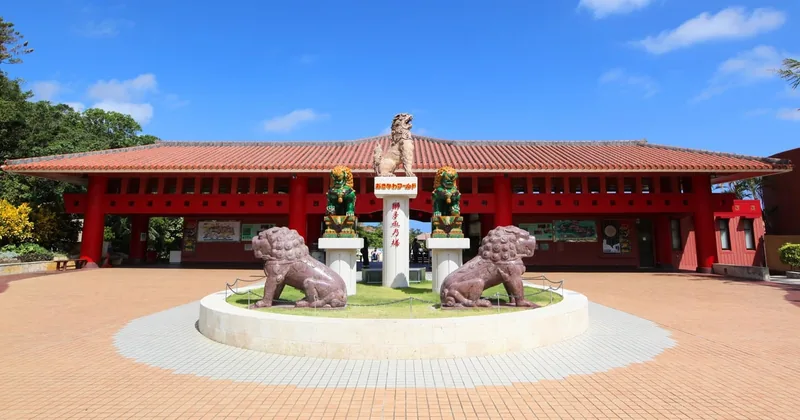
Shuri Castle's paid outdoor area, Okinawa World and its limestone cave, and the south coast in one day by bus from Naha.
Explore the south Okinawa bus tour with Shuri Castle Tour detailsIs November a good time to visit Okinawa?
Yes. Mild weather, little typhoon risk, and from 23 November 2026 the restored Seiden is open inside.
Late November 2026 is a special moment at Shuri. The park is closed on 22 November 2026, and the restored Seiden opens to the public on 23 November 2026, seven years after the fire. To go inside you need a timed slot on Webket, the park's official ticket site. Slots for 23 November to 31 December went on sale on 1 September and 1 October. Leftover same-day slots are sold online up to 15 minutes before the slot or at the Kofukumon ticket office.
Expect the first weeks to be busy. The park takes no group Seiden reservations from 23 November to 6 December 2026, because of the expected crowds. Slots for dates from 1 January 2027 go on sale at 13:00 on the first day of the month two months before: 1 November for January, 1 December for February.
The weather is on your side. November in Naha averages 25.0 °C by day and 119.1 mm of rain, and December is cooler and drier still. No tour on this site includes the timed Seiden interior ticket. Book your slot on Webket, the park's official ticket site, then pick a tour time around it. What reopened, and what follows, is in our reopening guide.
Pair your Seiden slot with a guided walk: four hours in Shuri with entrance fees and an Okinawan lunch included.
Check dates for the Shuri Castle Peace Walking TourFrequently asked questions
Which month is best to visit Okinawa?
For most visitors, late October to early December or March to April. November in Naha averages a high of 25.0 degrees Celsius with 119.1 mm of rain and few typhoons, per the Japan Meteorological Agency. In 2026 it also brings the reopened Seiden.
When is typhoon season in Okinawa?
Roughly June to October. The Okinawa region averages 7.7 typhoon approaches a year, with the most in August (2.2) and September (1.9), per the Japan Meteorological Agency. From January to March there were none in 1991 to 2020.
When is the rainy season in Okinawa?
Normally from about 10 May to about 21 June, per the Japan Meteorological Agency. In 2026 it started around 4 May. Showers are sudden, but it rarely rains all day.
When do beaches open in Okinawa?
Many popular resort beaches open for swimming in March, according to Visit Okinawa. The sea is around 21 degrees Celsius in February and nearly 30 in August.
Ready to book
Choose your tour
Free cancellation up to 24 hours before on every option. Prices are from-prices in USD and move with the season.
Okinawa South Bus Tour with Shuri Castle
- Shuri Castle paid outdoor area ticket
- Okinawa World ticket
- Drink at Banta Cafe
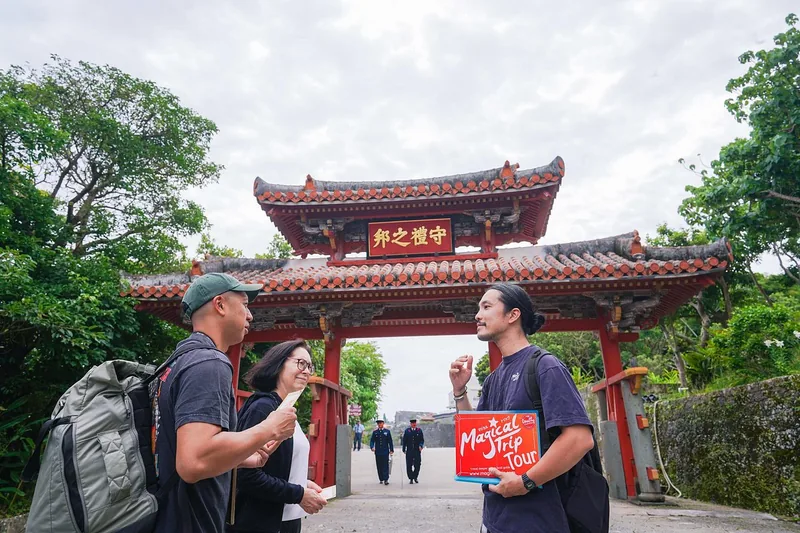
Shuri Castle Peace Walking Tour
- Shurijo Castle and Tamaudun entrance fees
- English-speaking certified local guide
- Okinawan lunch from a choice of dishes
Shurijo Castle & Tamaudun Guided Tour
- 3-hour guided walk with a local guide
- Shurijo Castle and Tamaudun
- Kinjo stone-paved road