Booking choice: The Shurijo Castle and Tamaudun tour, from $112 per person. Check dates Tour details
Shuri Castle (Shurijo, Sui Gusuku in Okinawan) is not a samurai castle. It was the palace of an island kingdom that traded across East Asia and kept its peace through diplomacy. Its vermilion halls, dragon pillars and curved stone walls tell that story, if you know how to read them.
This guide walks through the kingdom, the castle's role, its five destructions, the battle of 1945, the years as a university campus, the rebuild that began in 1992 and the restored Seiden that opens on 23 November 2026. A timeline table sits in the middle.
The quick answer
Shuri Castle was the royal palace and seat of government of the Ryukyu Kingdom from 1429 to 1879. It was destroyed five times: in 1453, 1660, 1709, during the Battle of Okinawa and by fire on 31 October 2019. The buildings you see are reconstructions. Since 2000 the original stone walls and foundations have been the World Heritage part of the site.
What was Shuri Castle?
The palace of the Ryukyu kings, the headquarters of the royal government and the center of the kingdom's religious rites.
Shurijo Castle Park describes three roles in one place. The castle was the royal residence. It was the seat of the Shuri royal government. And it was the hub of a network of priestesses who ran the kingdom's state rituals across the islands. Music, dance and court crafts grew up around it too.
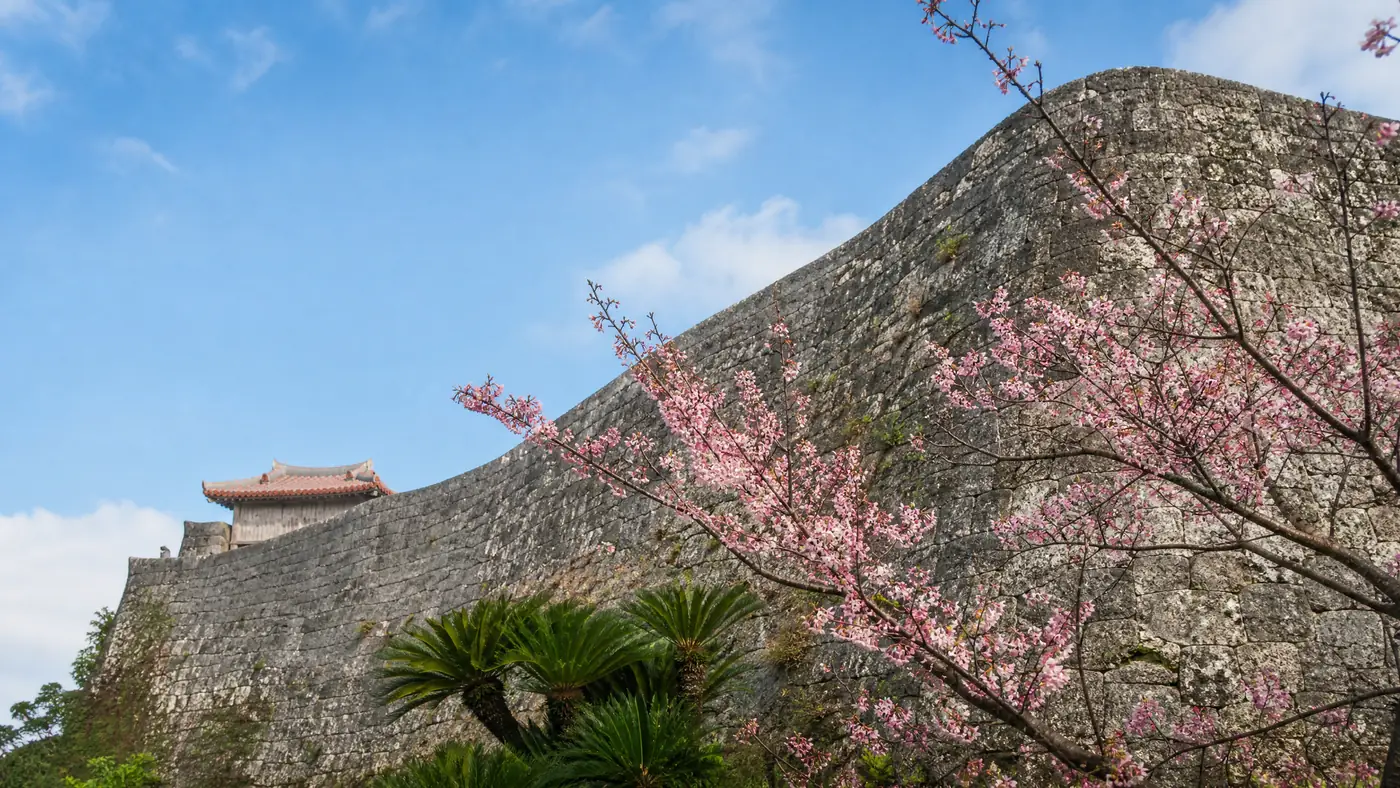
It follows the pattern of an Okinawan gusuku: a hilltop site inside curved stone walls, with open courtyards and sacred groves called utaki. The park dates the inner walls to the early 15th century and the outer walls to the middle of the 16th century. The halls are lined up on an east to west axis and face west, which the park calls one of the castle's defining features.
From the top of the hill you see why kings chose it. The historian George H. Kerr wrote that the site "commands the countryside below for miles around and looks toward distant sea horizons on every side".
Hear the kingdom's story where it happened: a guide walks you through the castle, Tamaudun and the Kinjo stone road.
Check dates for the Shurijo Castle and Tamaudun tourWho built Shuri Castle, and when?
Nobody knows the exact year. It was in use before 1429, when King Sho Hashi unified Okinawa and made Shuri his capital.
Before the kingdom, Okinawa Island was split between three rival states: Hokuzan in the north, Chuzan in the middle and Nanzan in the south. Shuri Castle was already in use in that Sanzan period. In 1429 King Sho Hashi of Chuzan defeated the other two and was recognized by the Chinese emperor as King of Ryukyu, with Shuri as his seat.
The castle and town grew most under King Sho Shin, who reigned from 1477 to 1526. Wikipedia credits his reign with the stone dragon pillars, the temple Enkaku-ji (1492) and the royal tomb of Tamaudun (1501). The sacred stone gate of Sonohyan-utaki was put up in 1519, and the Madamamichi royal road, whose Kinjo-cho section you can still walk, in 1522. Shureimon dates from the early 16th century, built under King Sho Sei, according to the Japan National Tourism Organization. The royal garden of Shikinaen followed much later, in 1799.
A small detail people get wrong: "Shurei" in Shureimon is not "Shuri". JNTO explains it as a word meaning courtesy, and the gate is often confused with the town's name.
Why does Shuri Castle look Chinese?
Because the kingdom lived on its ties with China. The Seiden mixes Chinese, Japanese and Ryukyuan design.
Formal relations with Ming China began in 1372 and lasted about five centuries. When a new king took the throne, the emperor sent envoys to Shuri for the investiture ceremony, held in the Una, the striped courtyard in front of the Seiden. The main hall faces west, toward China.
You see it in the details. Red lacquer, dragon motifs everywhere and two great dragon pillars of sandstone, about 4.1 m tall, at the entrance. Wikipedia compares some elements to the Forbidden City. Yet the Nanden, the South Hall, was built in a Japanese style, because it was used to receive officials of Satsuma, the Japanese domain that invaded Ryukyu in 1609 and held the kingdom as a vassal for roughly 250 years.
People ask whether this is the most beautiful castle in Japan. It is the most different one. There is no white keep and no samurai tower here: Shuri is a palace of courtyards and lacquered halls, built for ceremony and trade rather than war.
How many times has Shuri Castle been destroyed?
Five times: in 1453, 1660, 1709, 1945 and 2019. Each time the main hall was rebuilt.
The first loss came in 1453, when a succession dispute ended with the castle burned to the ground. Fires destroyed it again in 1660 and 1709. In 1945 it was all but erased in the Battle of Okinawa. And on 31 October 2019 a fire took the Seiden and the halls beside it.
| Year | What happened |
|---|---|
| Before 1429 | The castle is in use during the Sanzan period of three rival kingdoms |
| 1429 | Sho Hashi unifies Okinawa; Shuri becomes the capital of the Ryukyu Kingdom |
| 1453 | Destroyed for the first time, in a succession dispute |
| 1501 | Tamaudun royal mausoleum completed under King Sho Shin |
| 1609 | Satsuma forces take Shuri; Ryukyu becomes a vassal |
| 1660 and 1709 | Destroyed by fire, then rebuilt |
| 1799 | Shikinaen royal garden laid out |
| 1879 | The kingdom is annexed by Japan; the last king, Sho Tai, moves to Tokyo |
| 1945 | Destroyed in the Battle of Okinawa |
| 1950 to 1975 | University of the Ryukyus campus on the site |
| 1958 | Shureimon rebuilt |
| 1992 | Reconstructed main buildings open, 20 years after reversion |
| 2000 | World Heritage listing; Shureimon on the 2,000 yen note |
| 2019 | Fire destroys the Seiden, North Hall and South Hall |
| 2026 | Restored Seiden opens to the public on 23 November |
Between the fires the castle also declined. After 1879 the Japanese army used it as a barracks, then schools moved onto the grounds. By 1923 the old Seiden was so run-down that it was nearly demolished. The architect Ito Chuta helped save it, and it was repaired as a national treasure in the years before the war.
Was Shuri Castle destroyed in WWII?
Yes. The Japanese army had its headquarters under the castle. In late May 1945 it was shelled and burned.
In the Battle of Okinawa, the Japanese 32nd Army ran its defense of the south from a bunker dug beneath the castle. The lines around Shuri held from the American landings on 1 April through May 1945. From 25 May the battleship Mississippi shelled the castle for three days, and by 27 May it was on fire. The Japanese command withdrew south, and US Marines reached the castle on 29 May.
The loss went beyond buildings. Many treasures and historical documents of the Ryukyu Kingdom were destroyed or taken in the fighting, and some have since been returned.
People also ask whether Shuri Castle was a real battle. It was: the castle stood at the center of the Japanese defense line, which held from 1 April through May 1945. Two tours on this site cover that history at other places: the underground navy headquarters tour in Tomigusuku and the Urasoe Castle walk, which includes the Maeda Escarpment.
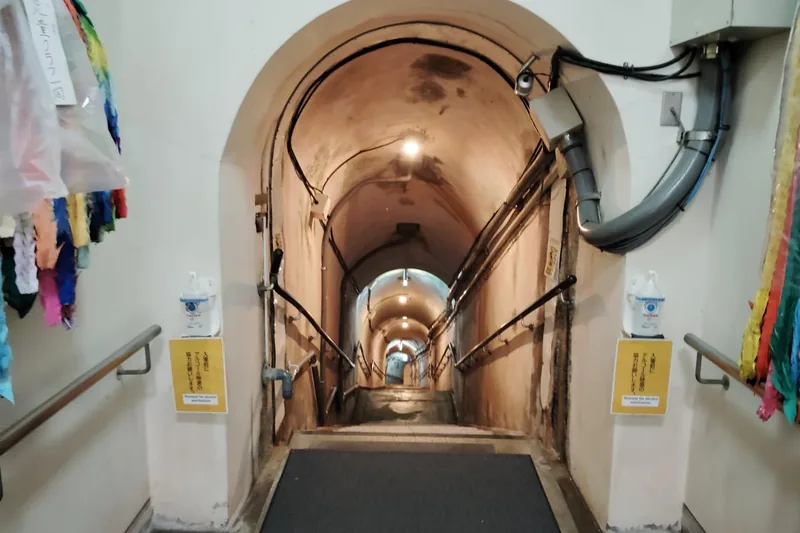
Walk the tunnels and museum of the former navy underground headquarters with a guide, south of Naha.
Explore the underground navy headquarters tour Tour detailsWhat happened to Shuri Castle after the war?
The site became a university campus. The castle was rebuilt from 1992 using records, photos and memory.
In 1950 the University of the Ryukyus opened on the castle site and stayed until 1975. Shureimon came back first, rebuilt in 1958. Kankaimon followed in 1974. The site became a National Historic Site of Japan in 1972, the year Okinawa returned to Japanese administration.
Once the university moved out, the national park project began. The main buildings and walls opened in 1992, for the 20th anniversary of reversion. Builders worked from historical records, old photographs and people's memories, and the park says the restored castle follows its look from the 18th century on.
In 2000 Shureimon went onto the new 2,000 yen note, issued for the new millennium and the G8 summit held in Okinawa that year. It is still the gate most people photograph first.
★★★★★Sara was a wonderful guide and more so an educator. It was interesting to learn the history but also learn how the reconstruction of the palace is being done. I highly recommend this tour.
The castle, Tamaudun and the Kinjo stone road with a guide who knows the rebuild story, entrance fees and lunch included.
Check dates for the Shuri Castle Peace Walking TourIs Shuri Castle a UNESCO site if it was rebuilt?
Yes, but only the original remains are the listed heritage: the stone walls and foundations, not the new buildings.
In December 2000 the Gusuku Sites and Related Properties of the Kingdom of Ryukyu became a World Heritage Site, the 11th in Japan, per the park. The listing has nine sites. In and near Shuri that means the castle site, Tamaudun, Sonohyan-utaki Ishimon and Shikinaen. Further away are Sefa-utaki and the castle ruins of Nakijin, Zakimi, Katsuren and Nakagusuku.
At Shuri Castle the inscribed parts are the remains that existed before 1950: stretches of the old wall and the foundations. Original stones were dug up and built into the restored walls, and near Kyukeimon you can see where old and new stones meet in one wall.
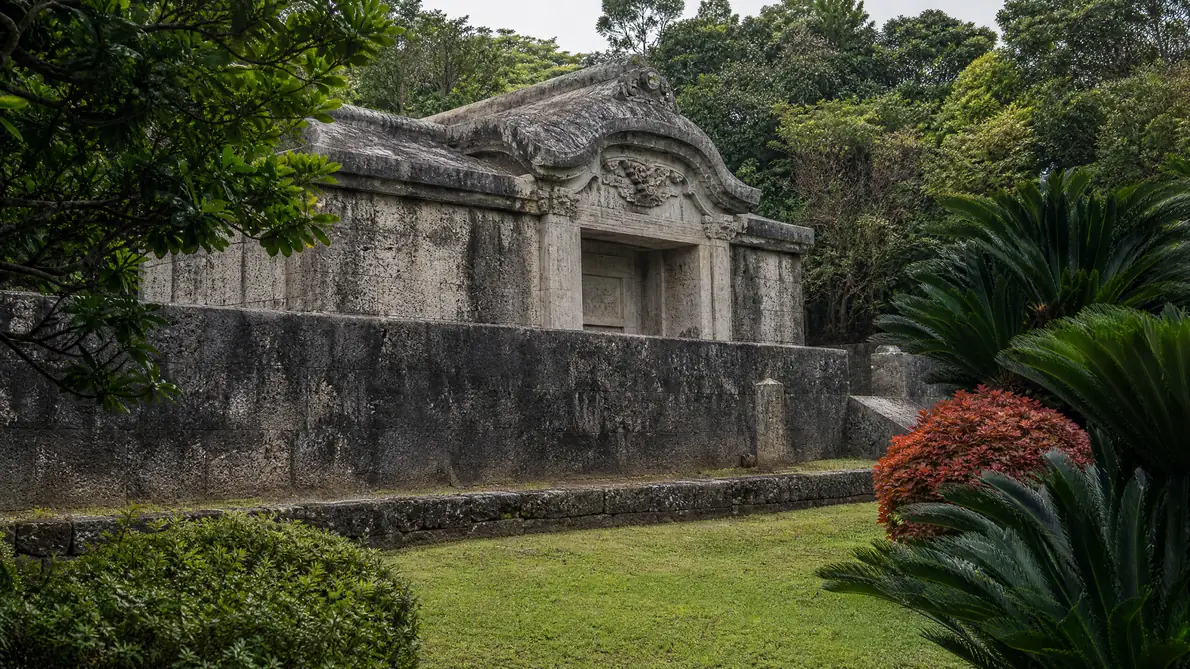
Tamaudun is the other place to feel the age of the kingdom. It was badly damaged in 1945, when its east and west chambers were destroyed, and has since been restored; it became a National Treasure in 2018. The castle and Tamaudun tour covers both, plus the Kinjo stone road, in 3 to 4 hours from $112 per person. It has 5.0 stars from 6 reviews on GetYourGuide. No tour on this site includes the timed Seiden interior ticket. Book your slot on Webket, the park's official ticket site, then pick a tour time around it.
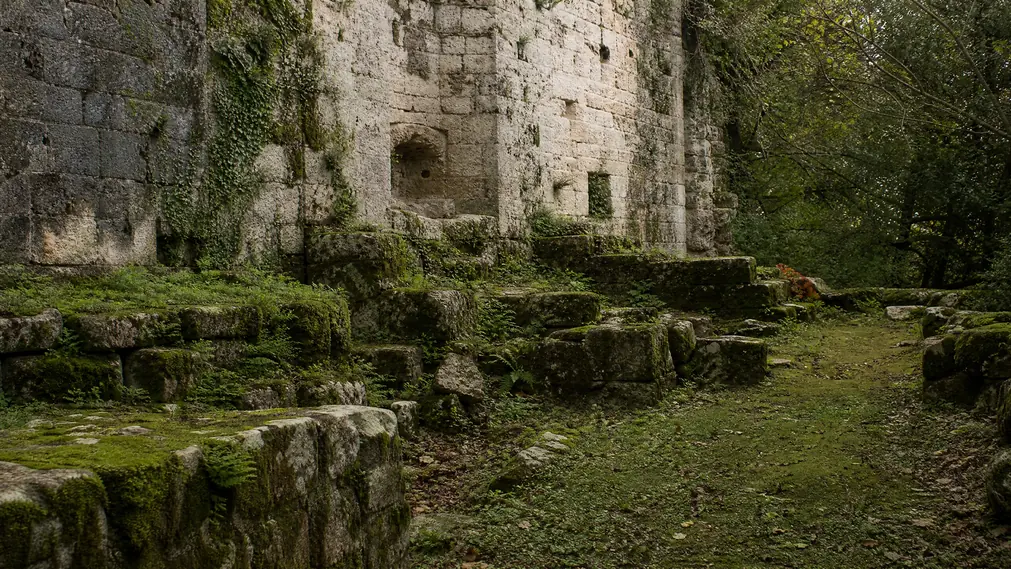
What happened in the 2019 fire, and what reopens now?
A fire on 31 October 2019 destroyed the Seiden and five other buildings. From 23 November 2026 the restored Seiden is open to visitors again.
The fire broke out in the early morning and burned until the afternoon. The Seiden, the Hokuden (North Hall), the Nanden (South Hall) and the Bandokoro were completely destroyed; news reports put the total at six buildings and about 4,200 square meters. Investigators found a burned electrical panel near the Seiden but did not confirm a cause.
Rebuilding began in February 2020. Roof tiling started in July 2024 and the exterior of the hall was finished in 2025. The whole park is closed on 22 November 2026, and the Seiden opens to the public on 23 November 2026, seven years after the fire. Only the Seiden is done so far; the North Hall, South Hall and other buildings follow in later stages.
Going inside needs the admission ticket with a Seiden interior viewing reservation, booked for a date and a 30-minute slot on Webket, the park's official ticket site. What the rebuild involved and what you see now are in our guide to the reopening.
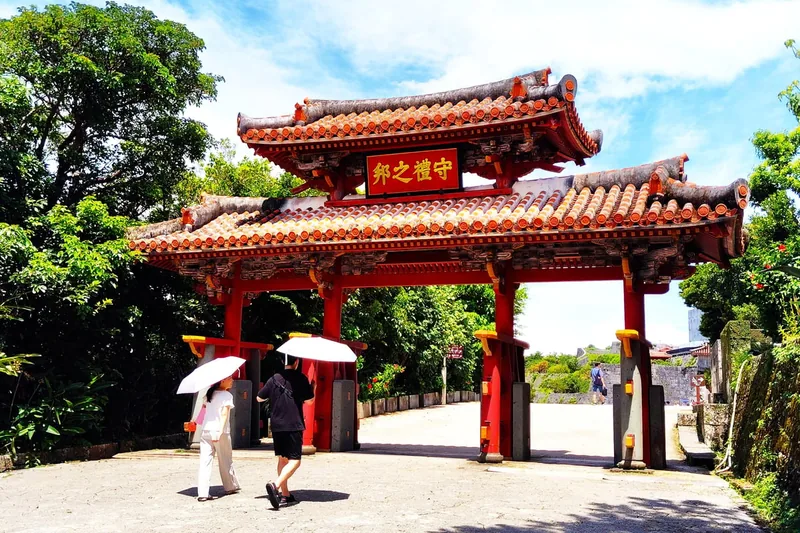
The castle, the royal tomb of Tamaudun and the Kinjo stone road with a local guide, with an early gate ceremony option.
Explore the Shurijo Castle and Tamaudun tour Tour detailsFrequently asked questions
How many times has Shuri Castle been destroyed?
Five times: in 1453 during a succession dispute, by fire in 1660 and 1709, in the Battle of Okinawa in 1945 and by fire on 31 October 2019. The restored Seiden opens to the public on 23 November 2026.
Was Shuri Castle destroyed in WWII?
Yes. The Japanese 32nd Army had its headquarters in a bunker under the castle. It was shelled from 25 May 1945 and burned, and US Marines reached it on 29 May. Almost nothing above ground survived.
Is Shuri Castle the same as Shurijo Castle?
Yes. Jo means castle in Japanese, so Shurijo and Shuri Castle are the same place. In Okinawan it is Sui Gusuku. The park itself is called Shurijo Castle Park.
Is Shuri Castle original?
The buildings are reconstructions, first from 1992 and again after the 2019 fire. The original stone walls and foundations survive in part and are the World Heritage part of the site, listed in 2000.
Ready to book
Choose your tour
Free cancellation up to 24 hours before on every option. Prices are from-prices in USD and move with the season.
Shurijo Castle & Tamaudun Guided Tour
- 3-hour guided walk with a local guide
- Shurijo Castle and Tamaudun
- Kinjo stone-paved road
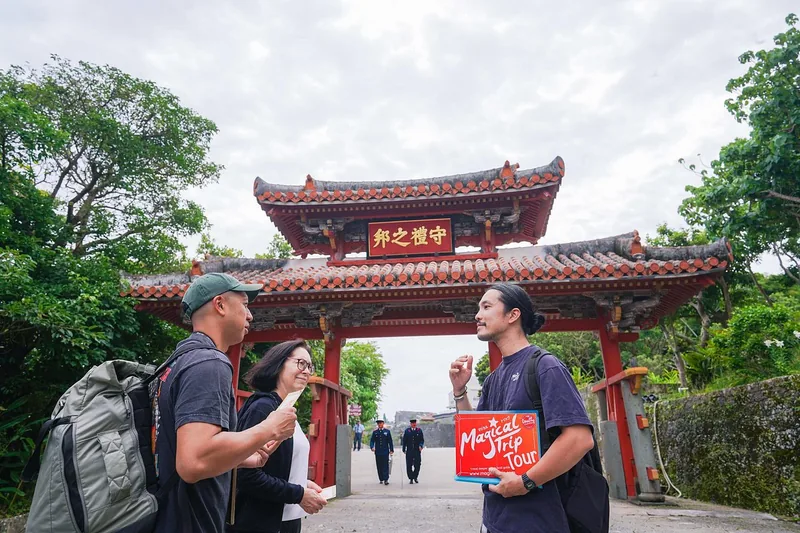
Shuri Castle Peace Walking Tour
- Shurijo Castle and Tamaudun entrance fees
- English-speaking certified local guide
- Okinawan lunch from a choice of dishes
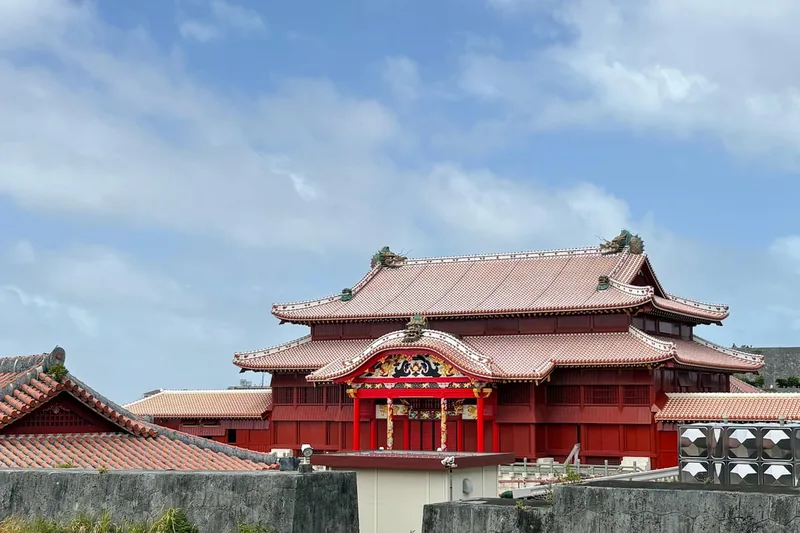
Shurijo Castle & Ryukyu Heritage Tour
Two hours in the castle park and Tamaudun, entrance fee included